Article takeaways
- Moving in winter can save 20-35% on moving costs due to lower demand for moving companies and rental trucks.
- Scheduling moves outside of peak moving season offers an increase in moving date flexibility, faster long-distance delivery times, and more specific arrival windows.
- Cold weather requires extra protection for temperature-sensitive items like electronics, dishware, and plants through insulated wrapping and climate-controlled storage.
- Short daylight hours in winter mean you have to start winter moves early and use efficient packing techniques ahead of time to complete moves safely before dark.
- Major downsides include risks of blizzards causing rescheduling, potential disruption to holiday celebrations, and difficulty for families with school-age children.
The idea of a winter move might invoke images of snowdrifts, icy roads, and a general sense of logistical dread. There’s no doubt that moving during the winter months presents some challenges that deserve careful consideration and preparation.
But moving in winter also comes with some real benefits. Winter is far outside of peak moving season, which means lower moving costs and more rental truck and moving company availability.
Maybe you’re here because you, you know, need to find a warmer climate, but haven’t decided where to move yet. Or maybe you know exactly where you want to move and just need some winter moving tips to guide you through the home relocation process.
Either way, you’ve come to the right place.
This guide to moving in winter starts with weighing the pros and cons. We’ll offer winter moving tips and packing techniques to ensure your moving day goes smoothly.
We’ll also reveal how to use our signature SelfStorage.com search tool to keep your items safe regardless of the weather conditions.
Is it actually cheaper to move in the winter?
Moving costs are the main consideration for most people planning a winter move. It’s an expensive process, no matter how you slice it, but the good news is that moving in the winter is one of the best hacks you can find to achieve a lower-cost move! Why? Three big reasons.
Lower moving costs
Whether you are buying or renting your new home, prices are likely to be considerably lower during the winter weather months. That’s supply and demand, baby! Demand goes down, and prices follow.
During peak moving season, moving companies are typically booked solid, so they keep prices high. In the winter months, when business is slow, they often try to drum up business by offering reduced rates.
“You’d be astonished by the discounts that general moving companies provide during this time,” said Ryan Carrigan, CEO and Founder of MoveBuddha. “Moving companies like ours give around 20-35% discounts during non-peak moving months.” Whether you’re going with a full-service moving company or the DIY rental truck route, moving in winter means off-season discounts. Lots of online moving platforms host moving cost calculators to help you estimate the costs ahead of time. But in addition to when you’re moving, you’ll need to know how far the move distance is and what moving truck size you’ll need to get an accurate price.
Lower storage rent
Many families rent a self storage unit during the moving process, especially if there is a lapse between their move-out and move-in dates. Self-storage can also serve as a longer-term solution if you are downsizing, especially with shrinkflation housing on the rise. In the off-season winter months, self storage unit prices are often lower.
That said, climate-controlled storage becomes even more critical in the winter season to protect belongings from extreme temperatures. Climate control uses humidity and temperature management technology to maintain a room temperature and safe humidity levels year-round.
Lower housing costs
In some markets, homes actually rent and sell for less during the winter months when real estate market demands are lower. If this is the case, where you plan to live, moving in winter could help you save on more than just a lower-cost move. A winter move; the gift that keeps on giving.
A qualified real estate agent or your potential new property manager can tell you what to expect regarding winter pricing.
Let’s look at some of the other factors that come into play when considering this important decision of moving in the winter months.
Benefits of moving in winter

The challenges of a winter move are certainly worth considering, and we’ll get to them down below. But the advantages of moving in the off-peak moving season, winter, can outweigh the difficulties if you time it right. Let’s take a look at the benefits of moving in winter.
More scheduling flexibility
If you decide to move in the summer, you’d better book months in advance. Even then, you might not get your first choice of moving company or date.
But booking in the winter months means that the moving company will have significantly more availability. That means you’re not competing for the moving day you want, and you can make last-minute adjustments if needed. This allows you to mold the move around your schedule rather than theirs.
Ashley Graber, owner of Cool Hand Movers, says winter is also a time when movers can be more flexible on their typical arrival windows. “Afternoon arrival windows are usually wide blocks because teams are performing another service in the morning,” she said. “If that morning slot is open, you may be able to book a more specific PM arrival time.”
Faster relocation
Moving on a summer weekend often means traffic. You might have to contend with beachgoers returning home from the lake, vacationers heading to the airport, or campers being shuttled to and fro.
But with a winter move, you have a better chance of empty roads, meaning you could get to your new home sooner! With fewer people moving in the winter months, there’s also less congestion at loading docks. This can lead to quicker transit times and smoother home relocation experiences, which Carrigan adds can be especially beneficial for long-distance moves.
“One industry secret I’ll share with you is that moving in winter will also mean your belongings have a faster drop-off if moving to another state,” he said. “Since moving companies have less demand for drop-off, they’ll get your belongings there in a week, whereas it could take a month during the peak summer season.”
Plus, more availability means you may have an easier time booking a last-minute move, given that movers typically book up in advance during the peak season months.
Move-friendly weather
The idea of “move-friendly weather” in winter might seem contradictory. But cooler temperatures can actually aid a more comfortable moving day than sweltering summer heat.
If you’ve ever moved during the summer, you know the feeling of sweat running down your back as you struggle to move boxes up and down stairs. In the winter, cooler temperatures mean you can avoid the dreaded overheating associated with hot-weather moving days.
Cold temperatures are not only less taxing on movers, but your items are also less susceptible to high humidity and heat-related damage. “Movers must get you unpacked and organized, as daylight is at a minimum and it’s cold,” Carrigan added. “This extra incentive can motivate everyone to work faster and more efficiently.”
Carrigan also shared an unexpected bonus of moving during the winter. “It can give you more time to acclimate to your new neighborhood. There is less pressure to get out and about, and you can get settled before you start to socialize.”
Downsides of moving in winter
Now that we’ve covered the pros of moving in the winter season, let’s take a look at the downsides. Winter months bring risks like harsh weather and driving conditions, fewer daylight hours, and missing out on holiday celebrations.
Risk of harsh winter weather conditions
While you won’t have to deal with sweltering heat, in many regions, winter brings the constant threats of blizzards and ice storms. A serious storm or dangerous road conditions can cause you to reschedule your entire moving day on short notice.
We suggest monitoring the weather forecasts daily leading up to your scheduled date. The state Department of Transportation websites are excellent resources for checking real-time road closures and driving advisories.
If there’s a window of mild weather conditions, we suggest packing ahead of time and staging your packed belongings in a climate-controlled storage.
If foul weather does hit on moving day, you just have to move your essentials and wait out the storm. Once it passes, you can hire professional movers or rent a moving truck to load everything from your storage unit to your new home.
Short daylight hours
Icy sidewalks aren’t the only downside to be aware of when moving in the winter months. Whether you’re hiring winter movers or doing a DIY winter move, the short daylight hours during the winter months are something you’ll have to plan for ahead of your moving day.
Moving when it’s dark outside can pose significant risks to the moving crew, especially in a dimly lit area. Unfortunately for those who decide to move in winter, it’s usually dark before 5 pm, meaning opting for a longer day to get the move finished may be out of the question.
Winter moves require you to employ efficient packing techniques ahead of time to be sure everything is ready to go bright and early on moving day. When the day comes, maintain clear communication with your moving company to ensure all tasks are completed safely and effectively before nightfall.
Extremely low temperatures can damage belongings
Some common household items are sensitive to cold weather. These include electronics, dishware, art, and plants, all of which will need to either be moved quickly from the truck or kept warm with a heat source like a space heater.
“If you’re in a location that experiences cold and snowfall, make sure to hire a moving team that has a strong reputation for follow-through,” Graber said. “And if you’re concerned about precipitation, opt for reusable moving bins instead of cardboard boxes. This sustainable solution offers better protection from the elements.”
Winter movers working in areas that are known for harsh winters sometimes use insulated moving trucks. A winter moving company will have a strategy for rapid loading and unloading.
But you can help them out by avoiding common packing mistakes. When you’re packing particularly cold-sensitive and fragile items, use weatherproof materials like cold-weather tape, insulated bubble wrap, and plastic bins rather than cardboard boxes.
You may miss out on the holidays
For more than a few of us, the winter months are synonymous with cherished holiday traditions. Planning a winter move has a tendency to disrupt these celebrations.
If your move is scheduled close to major holidays like Christmas or New Year’s, it’s important to be realistic about the sacrifices moving in winter might involve. Getting your holiday decor up or hosting a party may very well be impossible if you’re planning a winter move.
The cost savings might be tempting. But don’t discount the disruption to your holiday plans and plan your winter move well in advance.
Kids are still in school
If you’re moving with kids, and it includes your kids changing schools, a winter move could be a big downside. Not being able to finish out the school year can be very hard on kids, to an even greater extent than starting at a new school in the fall (when they won’t be the only “new kids”).
“I’d hate to have to pull my kids out of school to move,” said Brittany Brown, a Massachusetts mom of four who has moved three times in seven years with her crew. With another move on the horizon, she’s aiming for a summer date. “I’m tempted by the lower costs and better availability during winter months,” she said. “But I would have been furious with my parents if we’d ever moved in the middle of the school year, so I’ll try to be organized and book a moving date early once our plan is set!”
Tips for Moving in Winter

Moving during the winter months comes with both challenges that require extra preparation and benefits that leave room for strategic planning. There’s no doubt that cold temperatures, unpredictable weather conditions, and short daylight hours can complicate the already stressful process of moving. But with careful planning, protection, and professional help, you can still move in winter without issues. Here are some winter moving tips to help you navigate that process.
Planning and Preparation
- Start early with your packing and organization.
- Winterize your vehicle well before moving day to avoid any surprises.
- Make sure pet transportation is arranged in advance.
- Keep track of your utility transfer status to prevent any last-minute issues.
- Systematically label and pack your items to simplify the unpacking process.
- Confirm all moving details with your moving company or helpers to prevent any misunderstandings.
Hiring Professional Movers
- Consider hiring an off-season moving company, especially for long-distance or family moves.
- Professional movers can help avoid stress from heavy lifting and harsh weather.
- When there’s ice on the ground and snow obstructing your vision, hiring professional, safe, responsible movers can be the ideal choice.
Monitoring Weather Conditions
- Begin checking the weather forecast at least a week before your scheduled move.
- Be flexible in case you need to adjust plans due to severe weather conditions, such as blizzards or heavy snow.
Protecting Your Belongings
- Ensure extra insulation for items exposed to freezing temperatures.
- Use tarps to protect furniture from wet or snowy conditions.
- Double-wrap delicate and fragile items to prevent breakage.
- Consider transporting valuable or temperature-sensitive items in your personal vehicle.
- Look into climate-controlled storage for items that might be sensitive to temperature changes.
Utility Arrangements
- Arrange for heat, water, and electricity well ahead of the move.
- Engage with landlords and utility companies to ensure smooth service transfers.
- Ensure accounts and payment methods are set up before your move.
- Reduce heating during the move-in process to save energy and limit strain on the heating system.
Moving in the Winter? Here’s How SelfStorage.com Can Help
By now, you probably have a pretty clear idea of what to expect when moving in the winter. Start by planning and preparing beforehand, and know when to hire professional help.
You’ll need to be sure the utilities at your new place are set up well in advance so you’re moving into a place with heat and electricity, especially in areas with extreme winter conditions.
And as always, downsizing your belongings before you move can help lighten the load and streamline the packing and moving process.
Regardless of what you aim to keep, moving in winter requires protecting your belongings while you’re packing, loading, transporting, unloading, and unpacking.
But moving in the winter months doesn’t have to mean moving in harsh winter weather. There are windows of lighter conditions, and there are weeks of blizzards.
There may be some exceptionally scary weather conditions forecasted during your moving week. We suggest packing everything early and moving it into a climate-controlled storage unit ahead of time, while the weather is still clear.
When moving day comes, bring only your essentials to the new house. Once the weather calms down, you can rent a truck and move everything from storage into the new house before the next snowstorm hits.
That’s where self-storage comes in.
Whether you’re storing family heirlooms until you’re settled, or keeping your belongings safe in temporary storage between moves or until it warms back up, self-storage can make a great short-term or long-term solution.
But how do you find the ideal storage unit that’s heated and climate-controlled during winter storage and is also located conveniently between your old house and your new house for staging now and moving later?
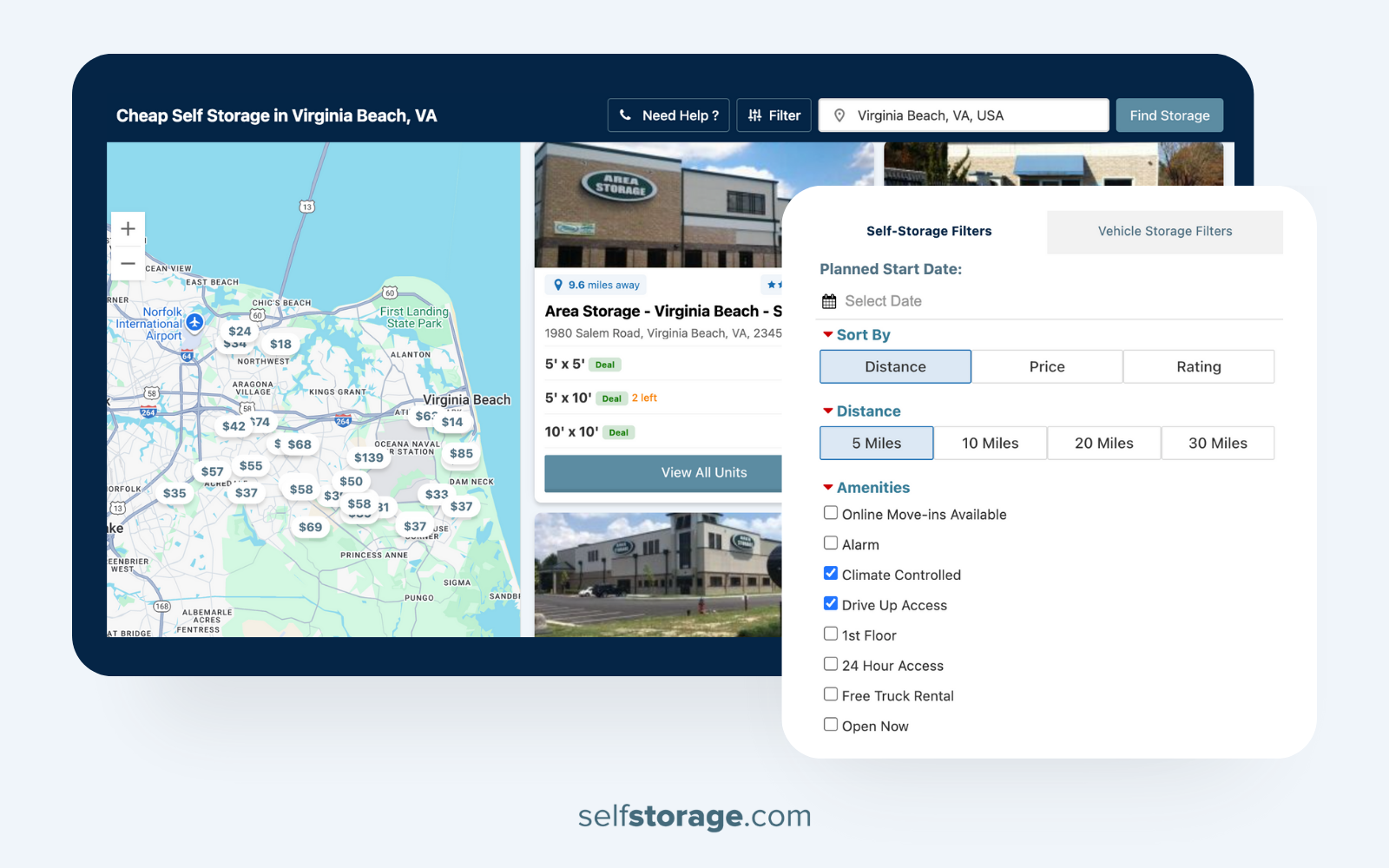
SelfStorage.com is here to help. Our signature self-storage search tool makes it easy to compare storage facilities in your area. Just punch in your zip code and use our amenity filters to isolate your ideal storage units by price, amenities like climate control and enhanced security features, and location. You choose your unit and move-in date, and we take care of the rest.