
Moving is expensive, time-consuming, and risky if you don’t plan ahead. From DIY moves down the street to professional movers relocating you across the country, there are plenty of opportunities for your belongings to get damaged in transit. Luckily, it’s easier than ever to take out a moving insurance policy and protect your investments in case your things don’t come out of the box in the shape they went in.
In this article, we’ll help you make sense of what moving insurance is and why it matters. We’ll go over the different options available and answer some frequently asked questions so you’re ready to navigate insurance providers and find the right policy for your needs.
What is moving insurance?
Moving insurance is a specific type of short-term insurance coverage that a customer takes out when moving. If any covered items are lost, damaged, or stolen in transit from one location to another, this type of policy will financially compensate the client to cover their losses.
Here are a few frequently asked questions about moving insurance.
What moving insurance is available through my moving company?
According to the Federal Motor Carrier Safety Administration, federal law states that movers going from one state to another must offer two different liability options referred to as valuation coverage. These options are released value protection, a basic liability policy that doesn’t cost you anything extra but only provides limited compensation for damaged items, and full value protection, a liability option that costs extra but holds the moving company fully responsible for anything damaged or lost in transit.
However, keep in mind that these options are only required if you’re moving across state lines. Moving to another place in the same state means the company doesn’t have to offer you these options.
The FMCSA has a “Your Rights and Responsibilities When You Move” booklet (movers are required to provide a copy when you move) that has more detailed information on the types of coverage.
What types of valuation protection can I get through moving companies?
Released value protection
Released value protection is a basic option provided by moving companies at no additional cost to you. Under this coverage, the moving company assumes liability for your belongings at a predetermined rate, which is no more than 60 cents per pound per item. This means you’ll only receive a small amount of money in compensation for broken items; for example, a 25-pound television valued at hundreds of dollars will only be covered for $15 (25 pounds x 60 cents).
If you’re not very worried about the value of your items and you’d rather not pay any extra, consider signing up for released value protection. You’ll need to specifically request it when signing your documents, as most moving companies default to full value protection.
Full value protection
Under this valuation coverage, you’ll pay an extra cost in exchange for the moving company taking responsibility for any repair or replacement costs of any lost or damaged items, up to the declared value of your entire shipment. If an item is lost, damaged, or destroyed during the move, the moving company may choose to repair the item, replace it with a similar item, or provide a cash settlement for the current market value of the item.
However, some high-value items may not be covered under these policies’ terms and conditions. For example, movers are allowed to limit their legal responsibility to loss or damage to items of “extraordinary value” (items valued at more than $100 per pound, such as jewelry, china, or furs). If you specifically list these items on the shipping documents, they are still responsible for the safe delivery. Ask for a written explanation of any limitations before you move.
Is valuation the same thing as insurance?
While it covers many of the same bases, valuation is not the same as insurance. Moving company valuation policies are more limited than insurance policies, and full value protection only covers up to the amount of money you’ve valued your belongings at. For extra protection, consider taking out a third-party policy.
Does my homeowners or renters policy cover my items in transit?
Sometimes. Generally speaking, homeowners or renters insurance policies do not cover your belongings in a move; once the items are considered “in transit”, they’ll only be covered by specific moving insurance. However, some policies provide limited protection for items in transit, so check with your agent to be sure.
Keep in mind that homeowners or renters insurance does provide coverage if a moving company damages your items while they’re packing them at your old home. Once they’re on the truck and in motion, you’ll need moving insurance to continue covering them.
Can I buy supplemental insurance to better protect my belongings through the moving company?
You can’t buy supplemental insurance through a moving company, as they aren’t authorized to sell insurance. However, it’s easy to get coverage through a third party if you want to make up the difference between the federally required valuation protection the moving company provides and the value you place on your items.
For example, a customer might choose released value protection through the moving company to cut costs, then take out a moving insurance policy through their main insurance provider to cover any damages or high-value items the moving company won’t cover under full value protection. You can also take out these policies in higher amounts if you need the extra compensation.
How do I choose the best moving insurance option for me?
There’s no way to know or plan for accidents and mishaps during a move, and different insurance and valuation options will suit different moving needs. If you’re ready to start shopping for coverage, the following questions will help you estimate the value of your belongings and find the coverage you need at the best price.
How do I value my household goods?
If you’re purchasing full value protection or taking out a third-party policy, you’ll need to estimate how much your belongings are worth before you do anything. Make a detailed inventory list of everything you’re moving and do a little research to estimate the value of each item, then add them all together.
What doesn’t valuation protection cover?
Valuation only covers mistakes or accidents that licensed movers at the company make, meaning it isn’t going to cover things like natural disasters (earthquakes, fires, floods, etc.) or anything else out of the movers’ control. To get around liability limits or get natural disaster coverage, try taking out a third-party policy.
How does full value protection work if one of my items is damaged during the move?
If the moving company damages one of your items, they’re liable for the current market value of the item. They will do one of the following as a solution:
- Repair the item
- Replace the item with a similar one
- Offer cash to replace the item (equivalent to the damaged item’s current market value)
Are there any scenarios where full value protection would not cover my items?
To cut the cost of any potential claims, moving companies often provide specific scenarios in which they won’t replace items or compensate you for losses:
| Situation | Impact on Liability |
|---|---|
| You opted not to use full-service movers | Moving yourself means you’re responsible for any damages, rather than holding professional movers responsible if they cause damage. |
| You waited too long to report lost or damaged items | Nine months is the standard window to report damages for most moving companies. |
| You did not declare any extraordinary or high value items in writing | If the company is unaware of your valuable items, they can’t be held responsible for them. |
| You included items that cannot be packed in a moving truck | Including dangerous or perishable items in a truck places any damage responsibility squarely on you. |
How much does moving insurance cost?
Moving insurance has a wide range of potential costs depending on the value of your items and the coverage you choose. Here’s a quick breakdown of the three main options available.
| Coverage type | What it covers | Claim options | Cost to expect | High-value item coverage? |
|---|---|---|---|---|
| Released value protection | Up to 60 cents per pound per item | Cash reimbursement; no repairs or replacement | None; included in moving contract | No |
| Full value protection | The full value of your inventory | Cash reimbursement up to item’s full market value, repair, or replacement | Around 1% of the total value of your items | No |
| Third-party moving insurance | The full value of your inventory or more | Cash reimbursement, repair, or replacement | From 1% to 5% of the total value of your items | Yes |
Why is moving insurance important?
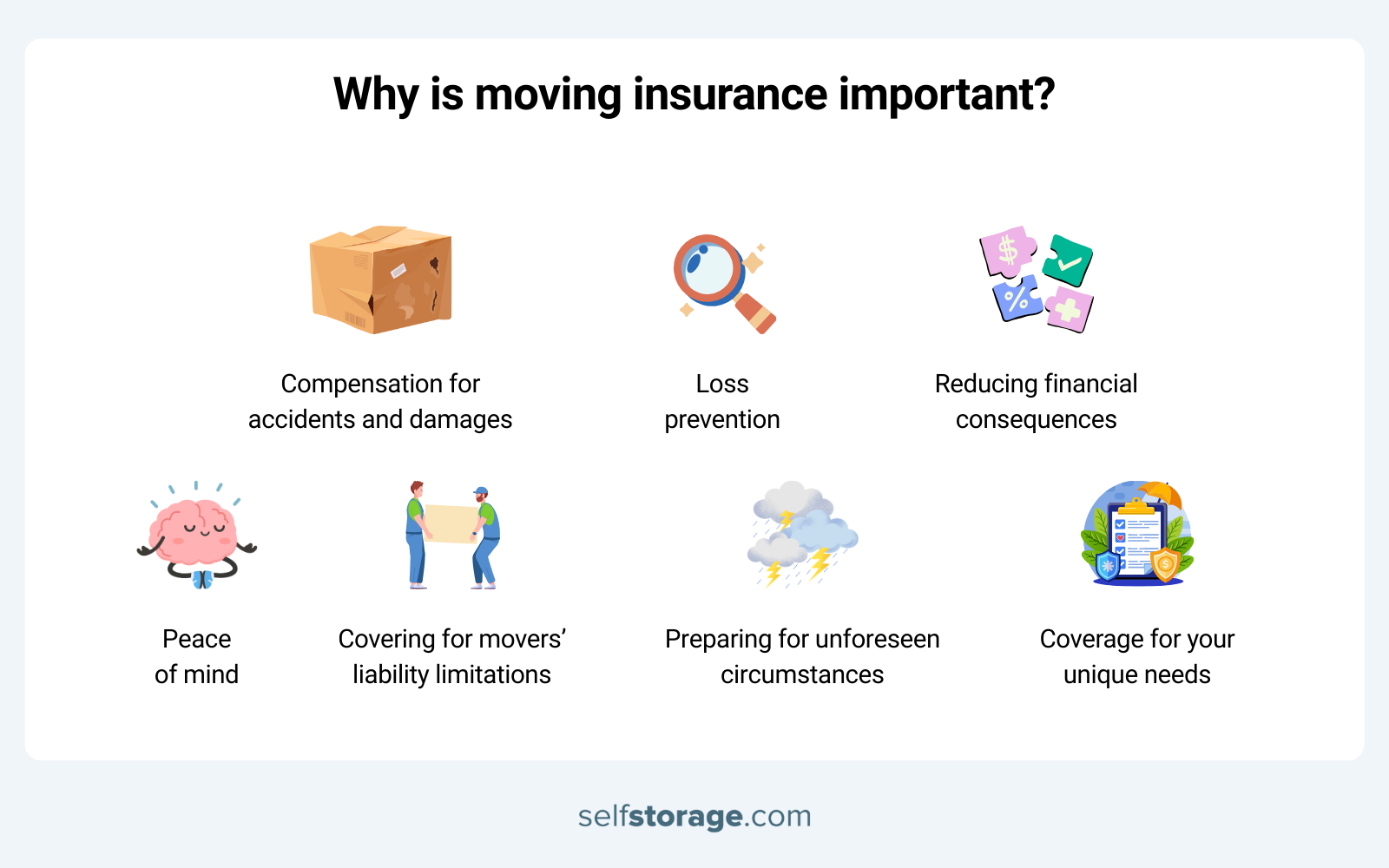
Getting moving insurance can protect your belongings from all kinds of common accidents and surprises. Let’s go over a few reasons you should consider purchasing a policy.
- Compensation for accidents and damages. Moving is a long process and leads to many opportunities for items to be damaged by mistake by amateurs and professionals alike. Having a moving insurance policy in hand will make sure you’re compensated for any accidents.
- Loss prevention. Whether one of your items is stolen or just goes missing, having coverage will enable you to replace it or receive compensation for it.
- Reducing financial consequences. Some items are irreplaceable, and some items are expensive to fix. Having moving insurance will make sure your wallet doesn’t take a hit if you need to replace broken items like electronics or mitigate the impact of losing something sentimental.
- Peace of mind. Moving is a stressful time, and having comprehensive moving insurance will take at least one worry off your plate during the process.
- Covering for movers’ liability limitations. Professional movers do their best to handle items with care and provide compensation in the face of accidents, but for high-value items that their liability won’t cover, it’s worth getting moving insurance.
- Preparing for unforeseen circumstances. Incidents like natural disasters or traffic collisions can cause your belongings to be damaged in transit, and the moving company can’t be held responsible for these damages. Moving insurance can offer protection against these unexpected events.
- Coverage for your unique needs. You can often choose a moving insurance policy based on the value you want to cover and the amount of risk you want to prepare for, enabling you to get the coverage you need at the price you want.
Do I need moving insurance?
Taking out a moving insurance policy offers peace of mind and full coverage in case anything unexpected happens to your belongings during a move. However, whether or not you need a policy depends on your situation. If you’ve got high value items and you want to be prepared for every possible accident, we recommend purchasing third-party insurance.
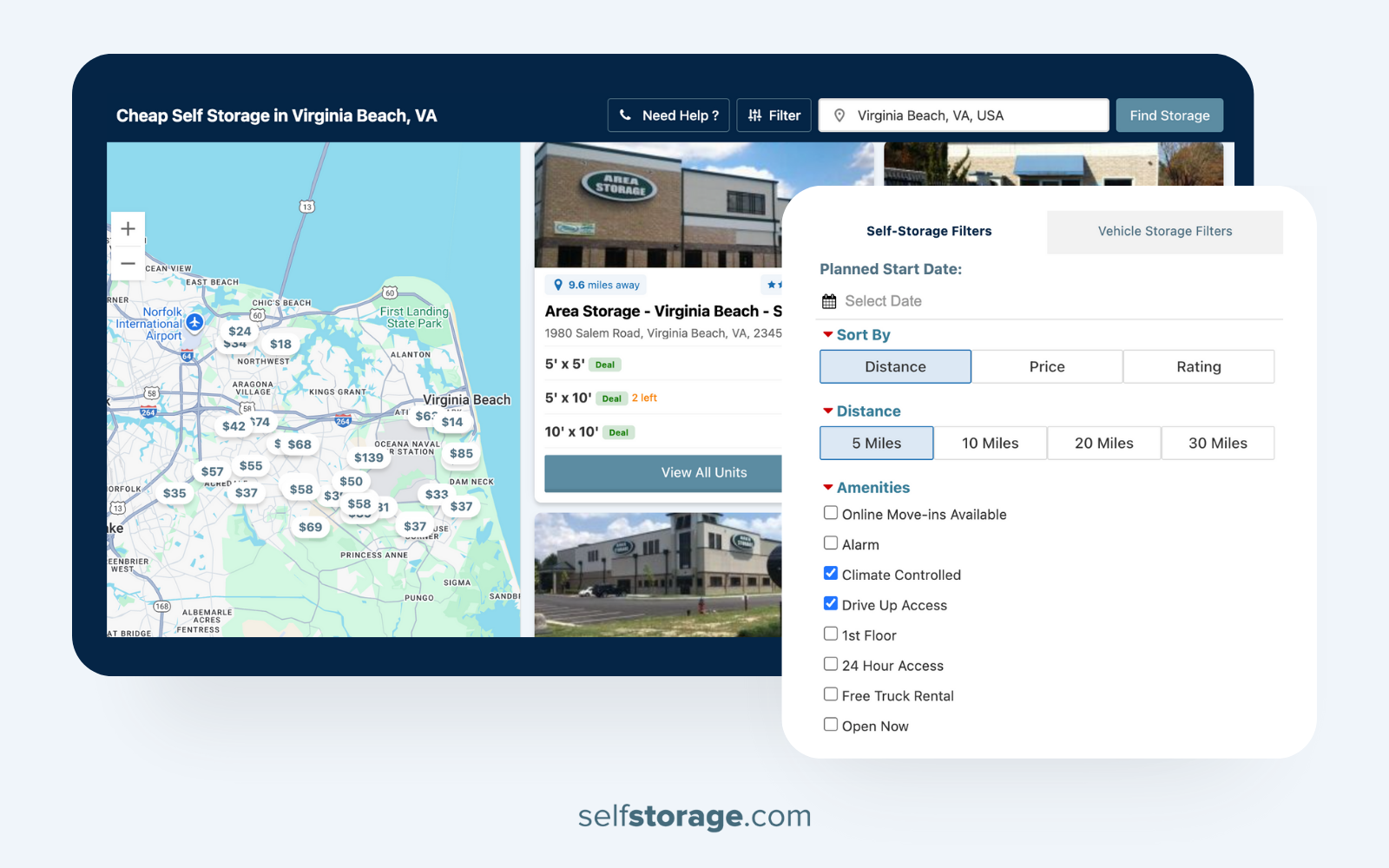
For extra protection during a move, consider renting a climate controlled self storage unit through SelfStorage.com! Our search tool can help you compare prices on facilities near you and filter results by the features you need most of all.